


-
Delivery information
Free shipping at 100€ within Germany*
Shipping costs and delivery

-
Payment options

Free shipping at 100€ within Germany*
Shipping costs and delivery
From ancient honey cake to today's Christmas cookie classic
Lebkuchen is one of the most tradition-rich baked goods in Central Europe. But its history doesn't begin in medieval Nuremberg – it reaches all the way back to antiquity. On this page, you'll find a quick overview of how Lebkuchen came to be and the most important varieties that grew out of it – from the gingerbread house to regional specialties like Aachener Printen.
For a deeper dive into specific topics, we link to our dedicated info pages.
Table of Contents
As familiar as the word sounds today, its origin isn't entirely settled. Linguists have proposed several possible roots. One theory traces the word back to the Latin libum, meaning “flatbread” or “sacrificial cake.” Another points to the Germanic Laib as the source – quite simply, a loaf of bread. Some scholars also suspect a connection to the Middle High German lebe, meaning “remedy,” which would line up nicely with how Lebkuchen was historically used as a health-promoting baked good.
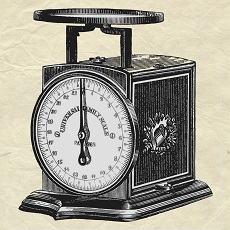
Early Predecessors in AntiquityHoney-sweetened baked goods go back surprisingly far. As early as 350 B.C., it's documented that the Romans brushed their cakes with honey before baking. The ancient Egyptians also knew small honey cakes – we know this from grave goods showing such pastries. These early predecessors had little in common with today's Lebkuchen, but they show one thing clearly: the idea of combining flour with honey is ancient. |
 |
The actual forerunner of today's Lebkuchen emerged in the 13th century in the Belgian city of Dinant. From there, the baked good spread south by way of Aachen – eventually reaching Nuremberg, where it took on the form it's still best known for today.
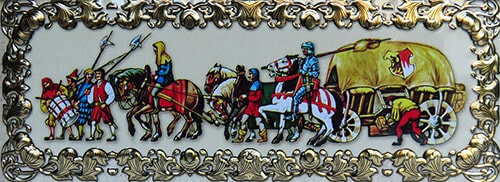
At first, Pfefferkuchen – the historical umbrella term for all spiced cakes, since “pepper” in the Middle Ages referred to all exotic spices – was known only inside monasteries. Monks baked it year-round, since its high sugar content gave it an unusually long shelf life. It was an especially popular treat during Lent, traditionally enjoyed with a stein of strong beer.
In 1395, Lebkuchen bakers working outside the Nuremberg monastery walls show up for the first time in official records – the start of Lebkuchen as a craft trade. If you'd like to learn more about Nuremberg's role as the city of Lebkuchen, you'll find detailed information on our page about Nuremberg Lebkuchen.
Over the centuries, two fundamentally different Lebkuchen families developed out of the original Pfefferkuchen. They differ above all in the consistency of the dough – and, as a result, in what they're used for.
Brown Lebkuchen has a comparatively high flour content. Together with the spices and the traditionally used honey (today often replaced by sugar syrup), this creates a firm, kneadable dough. That very property is what makes it the perfect base material for gingerbread figures of every kind.
Unlike brown Lebkuchen, wafer-based Lebkuchen is made from a soft, almost creamy batter that's piped onto a thin baking wafer with a pastry bag. Within this family, there are different quality grades ranging from basic Oblatenlebkuchen all the way up to the finest Elisenlebkuchen – depending on the proportion of nuts and the amount of flour used.
You can find more about wafer-based Lebkuchen in our Oblaten-Lebkuchen category. For detailed information on the top tier, the Elisenlebkuchen, head over to our Elisenlebkuchen info page – including the legend behind how the name came about.
For a detailed comparison chart of all the varieties with their exact quality criteria, see our Lebkuchen Knowledge page.
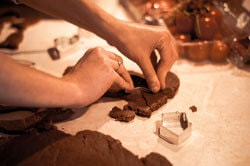
Brown Lebkuchen plays a special role when it comes to Christmas figures. Because its dough is firm and pliable, it lends itself perfectly to cookie cutters, knife work, and assembly into shapes.
|
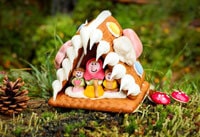
The most famous shape of all is the gingerbread house – known regionally as Pfefferkuchenhaus, Knusperhaus, or Hexenhaus (witch's house). It became famous above all through the Brothers Grimm fairy tale “Hansel and Gretel.” Today, the gingerbread house has spread well beyond German-speaking countries – in Scandinavia, Eastern Europe, and the English-speaking world, it's part of the Christmas tradition too. For many families, building and decorating a gingerbread house together is a fixed part of the holiday season. |
 |
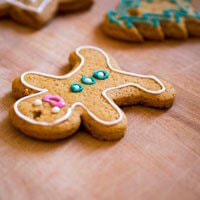 |
The gingerbread man, too, has a surprisingly long history. He's been around since the 16th century, but for a long time he was kept alive mostly in the English-speaking world – where he's known as the Gingerbread Man. Over the past few decades, thanks in no small part to films like Shrek, he's been gaining popularity in Germany again as well. |
You'll find them at every fair and Christmas market: the decorated gingerbread heart with a message piped in royal icing. It belongs to the brown Lebkuchen family and has long been given as a gift – whether at a carnival, at Oktoberfest, or at Christmas. Like all brown Lebkuchen, it's sensitive to humidity, which is why proper storage matters quite a bit. You can read more about that on our info page Storing and Preserving Lebkuchen.
Beyond Nuremberg Lebkuchen, plenty of regional specialties have developed across Germany. They set themselves apart through their own production techniques or distinctive ingredients – and they're carried on with pride in their home regions.
Aachener Printen is a variation of brown Lebkuchen and has been around since the 15th century. They get their name from how they're made: the dough is pressed into intricately carved wooden molds – the Dutch prent and the English print mean exactly that. Depending on the occasion, the Printen come stamped with elaborate patterns or in special shapes. The name “Aachener Printen” today is a protected geographical indication.
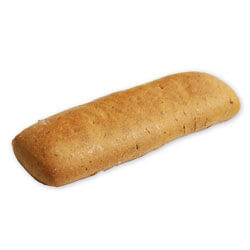
Aachener Printe in its plain form |
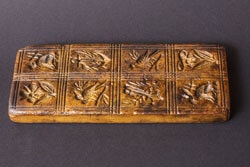
Wooden mold used to stamp the patterns |
|
These small half-spheres of brown Lebkuchen dough, roughly 2 to 3 centimeters across, were invented in the 18th century. Their flavor is noticeably more peppery and spice-forward than comparable cookies. Well-known regional varieties include Mecklenburg Pfeffernüsse and Offenbach Pfeffernüsse – the latter said to have been a favorite of Goethe himself. The signature feature is the white sugar coating, sometimes swapped out for a dark chocolate version instead. |
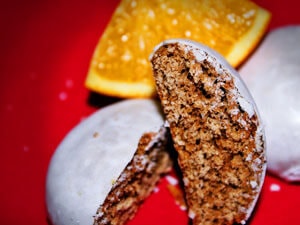 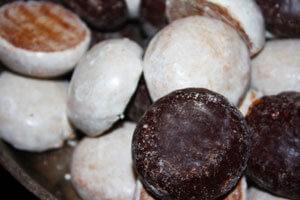 |
Pulsnitzer Pfefferkuchen comes from the Saxon town of Pulsnitz and has been around since the 16th century. Its trademark: the use of rye flour and a special production process in which dough portions aged for different lengths of time are blended together. After baking, they're finished with a thick chocolate coating.
The Neisser Konfekt from Silesia and the Coburger Schmätzchen have earned a permanent spot in German Lebkuchen culture as well. Each of these specialties has its own backstory, its own recipes, and its own loyal following.
If you'd like to roll up your sleeves and try it yourself, this classic brown Lebkuchen recipe is a great place to start. The dough works especially well for cutting out different figures – perfect for a creative baking afternoon with the kids. As a base for a gingerbread heart, a gingerbread man, or the building blocks of a gingerbread house, it's an excellent choice.
Looking for an Elisenlebkuchen recipe instead? You'll find that on our Elisenlebkuchen info page.
Ingredients
|
 |
Tip: Right out of the oven, brown Lebkuchen is often still a bit hard. To get them nice and soft, store them for a few days in an airtight tin – for more practical tricks, head over to our page on storing Lebkuchen.
Want to dig even deeper? On our info pages, you'll find more background reading: